CLICK HERE FOR THOUSANDS OF FREE BLOGGER TEMPLATES »

Sunday, March 2, 2008

Negative Effects of Smoking


We often heard from our parents that when they were young, people could buy cigarettes and smoke pretty much anywhere — even in hospitals! Ads for cigarettes were all over the place. Today we're more aware about how bad smoking is for our health. Smoking is restricted or banned in almost all public places and cigarette companies are no longer allowed to advertise on TV, radio, and in many magazines.

Everyone knows that smoking can cause cancer when you get older, but did you know that it also has bad effects on your body right now? A cigarette contains about 4000 chemicals, many of which are poisonous. Some of the worst ones are:

Nicotine: a deadly poison
Arsenic: used in rat poison
Methane: a component of rocket fuel
Ammonia: found in floor cleaner
Cadmium: used in batteries
Carbon Monoxide: part of car exhaust
Formaldehyde: used to preserve body tissue
Butane: lighter fluid
Hydrogen Cyanide: the poison used in gas chambers

Every time you inhale smoke from a cigarette, small amounts of these chemicals get into your blood through your lungs. They travel to all the parts of your body and cause harm.

Almost everyone knows that smoking causes cancer, emphysema, and heart disease; that it can shorten your life by 10 years or more; and that the habit can cost a smoker thousands of dollars a year. So how come people are still lighting up? The answer, in a word, is addiction.

Smoking is a hard habit to break because tobacco contains nicotine, which is highly addictive. Like heroin or other addictive drugs, the body and mind quickly become so used to the nicotine in cigarettes that a person needs to have it just to feel normal. People start smoking for a variety of different reasons. Some think it looks cool. Others start because their family members or friends smoke.

Smoking also can be costly. Try to imagine, a pack of cigarettes costs $4.50, on average. That means, even if you buy just one pack a week, you'll spend $234 in a year. Some people smoke a pack a day, which adds up to $1,642! That's a lot of CDs, computer games, and clothes you could buy instead.

Here are some facts about what smoking cigarettes does to you:
a) Smoking makes you smell bad, gives you wrinkles, stains your teeth, and gives you bad breath.
b) Smokers get 3 times more cavities than non-smokers.
c) Smoking lowers your hormone levels.
d) When smokers catch a cold, they are more likely than non-smokers to have a cough that lasts a long time. They are also more likely than non-smokers to get bronchitis and pneumonia.
e) Teen smokers have smaller lungs and a weaker heart than teen non-smokers. They also get sick more often than teens who don't smoke.
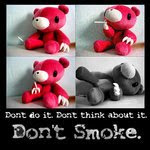
Negative Effects of Smoking

Health Effects:

1) The effects of cigarette smoking on the cardiovascular system are multifold: Smoking lowers HDL cholesterol ("good" cholesterol), even in adolescents.

2) Smoking is the cause of nearly 85 percent of all cases of lung cancer in the United States, but smoking accounts for other types of cancers as well.

3) Smoking has many negative effects on bones and joints since it impairs formation of new bone.

4) Smoking increases acid secretion, reduces prostaglandin and bicarbonate production and decreases mucosal blood flow—which can cause peptic ulcers.

5) Smoking deteriorates the elastic properties of the aorta, the largest blood vessel in the body, which increases the risk for developing blood clots.

6) Smoking increases the activity of the sympathetic nervous system, putting additional stress on the system that regulates the heart and blood vessels.

7) In women, smoking increases risk for cardiovascular disease because it effects hormones that cause estrogen deficiency.

8) Those who smoke a pack of cigarettes a day have almost two and a half times the risk for having a stroke as nonsmokers.

9) Tar from cigarettes causes specific DNA damage to the lungs, making it particularly difficult for cells to repair.

10) Smoking and smokeless tobacco (chew) account for over 60 percent of cancers of the throat, mouth and esophagus.

11) Smokers have higher rates of leukemia, and cancers of the stomach, bladder, kidney and pancreas.

12) Women who smoke are at an exceptionally high risk for developing osteoporosis, and women smokers have a slightly increased chance of developing rheumatoid arthritis.

13) Smokers are also more disposed to developing degenerative disorders and injuries in the spine.

14) Smoking also delays the healing of gastric and duodenal ulcers.

15) Cyanedim, a chemical found in cigarette smoke, interferes with thyroid hormone production, which can lead to thyroid disease.

16) Heavy smokers are at risk for developing cataracts of the eye, and smokers also have twice the risk of nonsmokers for developing macular degeneration, an age-related eye disorder.

17) Smokers look older than nonsmokers since smokers develop more and deeper wrinkles as they age.

18) Women who smoke are at greater risk for infertility.

19) Because smoking restricts blood vessels, it can prevent oxygen and nutrients from getting to the skin - which is why smokers often appear pale and unhealthy.

20) All those cigarettes leave smokers with a condition called halitosis, or persistent bad breath.

Izat The Flying Bruneian

consequences of smoking

THE NEGATIVE EFFECTS OF SMOKING.


Smoking is not only harmful for the user, but it also affects the harmless people around the user that inhale the filthy smoke. This is called second-hand smoke. All parts of the body are affected when you smoke. Your face, your finger tips, and many others. Smoking can make you also have wrinkles and it tightens your skin. So, when you are 16 and still smoking by 20, you will look 35.


->Smoking causes cancers in parts of the body (including the kidney, cervix, and bone marrow) that have not been previously linked to to smoking in this series of reports.


->Smoking diminishes health generally. Adverse health effects begin before birth and continue across the life span. Smoking also causes cataracts and contributes to the development of osteoporosis, thus increasing the risk for fracture in the elderly.


->During 1995-1999, smoking caused approximately 440,000 premature deaths in the United States annually, leading to 13.2 years of potential life lost for male smokers, and 14.5 years lost for female smokers.


->Changes in cigarettes that reduce machine yields of tar and nicotine have not had any clear benefits for public health.


->Smoking causes other respiratory diseases like chronic coughs, shortness of breath, asthma, and emphysema. A smoker will also make colds, flus, and ordinary illnesses worse than usual. That happens because their immune system is worse than before they started smoking. A smoker will wake up everyday with a hacking cough and it stays there all day.


->Smoking dyes the smoker's teeth and fingernails yellow. It gives smokers bad breath, and it causes mouth cancers and gum disease. Smoking damages teeth and gums permanently. Smoker's teeth fall out faster than non-smokers and smoker's are likely candidates for oral cancer.


->Babies who are born to mothers who smoke usually are 200 grams lighter than babies born to mothers that don't smoke. Smoke inhalation contributes to babies being victims of "Sudden Infant Death Syndrome."


->Your fingers and fingernails become discolored with tarry, mustard-hued stains that can't be scrubbed off.


->Chronic tobacco users may develop tobacco amblyopia, a condition that involves difficulty with symmetric aligned eye movements.


->Female smokers over the age of 35 who take oral contraceptives ("the pill") are at greater risk for heart attack, stroke, and blood clots.


->If you are overweight or have high blood pressure or diabetes, smoking will aggravate these conditions and could lead to more severe symptoms and/or greater need for treatment.


->Children of mothers who smoke stand a greater chance of having asthma, ear infections, and upper respiratory infections.


->Decrease athletic ability.


->Stains the lungs black.


->Most kids who smoke regularly are already addicted, want to stop it but can't.


->


Negative Effect of Smoking


NEGATIVE EFFECT OF SMOKING


  • Increased risk in lung cancer and cardiovascular disease.

  • Regular smokers are estimated to live to 2.5 to 10 years less than nonsmokers.

  • Diseases of the respiratory tract such as ephysema and cancer.


  • Smoking causes impotence because it promotes arterial narrowing.


  • Birth defects of pregnant smokers' offspring.


  • Cataracts that may cause blindness.


  • Increased risk of Alzheimer's disease and decline in cognitive abilities.


  • Reduced memory and cognitive abilities in adolescent smokers.


  • It makes our clothes and hair smells.


  • Blood pressure and heart rate are increased, which means the heart is working harder than it should.


  • The blood flow to the body's extremities, such as hands and feet is reduced.


  • Reduced appetite is seen in some people, but smoking is a poor way to try to control weight.


  • Foul breath, stained teeth and fingers, annoying coughing, reduced or foss of taste and smell, a reduced immune system often sees smokers getting more colds and flu, with longer recovery times, reduced potency in men and fertility in women.


  • Effects the largest organ in our body, the skin, making smokers look older, earlier.

  • A smoker irritates people by the foul smell and poisonous nature of his smoking.

  • A smoker wastes his wealth on that which harms and has no benefit.

  • A smoker inhales the smoke that does not give him any nourishment.

  • A smoker, whether he likes it or not, makes of himself an example for his children and others to follow.

  • Teens seem to be more abrasive when smoking or they feel like they are older and wiser when they smoke.

Monday, February 18, 2008

Review of freedom writers movie

This movie tells us about the difficulty and hardship of a teacher to lead her students out from racial segregation in education. The environment is filled with prejudice and racial discrimination of various races in particular the setting is mostly set in school environment, which means there is a present of discrimination in the education system. Example for this is text books are not allowed to students which is totally based on irrational reasons. Text books are one of the most important criterions in education learning but it is disallowed in this movie, why? It is important to point out the flaws in this chaotic education system because it is totally irrational and unreasonable to the cause of equality. In our beloved country here, we should be thankful and grateful to have a very excellent form of system but we must never stop improving this system because we can not afford to get left behind to other countries. Lastly, education is one of the most important things in our lives and it must continuously become a part of our lives.

EUTHANASIA
"Euthanasia is the practice of medically-assisted death. It is illegal in most countries."
Arguments for and against voluntary euthanasia:
  • since the past few years the eunthanasia is the most hot topic to be discuss for people all around the world.
THE REASONS OF PEOPLE IN FAVOUR OF EUTHANASIA:
  1. It allows terminally ill people to control the timing and place of death.
  2. It allows terminally ill people who are in pain to be relieved of their suffering.
  3. It allows a terminally ill person to die with dignity.
  4. Choosing when to die is an issue of personal freedom.

THE REASONS OF PEOPLE AGAINST EUTHANASIA:

  1. Death is a natural part of life and should not be controlled by a doctor or anyone else.
  2. It can be open to abuse by relatives or doctors who have ulterior motives.
  3. A cure may be found for a terminal illness and if the sufferer is dead they will not be able to benefit from the cure.
  4. Death cannot be legislated for.

Euthanasia

Euthanasia


Euthanasia is the practice of medically-assisted death. It is illegal in most countries. In most cases euthanasia is carried out because the person who dies asks for it, but there are cases called euthanasia where a person can't make such a request. A person who undergoes euthanasia is usually terminally ill, but there are other situations in which some people want euthanasia.


Euthanasia can be classified into two category;


1.Active euthanasia

"Passive euthanasia" is usually defined as withdrawing medical treatment with the deliberate intention of causing the patient's death. For example, if a patient requires kidney dialysis to survive, and the doctors disconnect the dialysis machine, the patient will presumably die fairly soon.

2. Passive euthanasia

"Active euthanasia" is taking specific steps to cause the patient's death, such as injecting the patient with poison. In practice, this is usually an overdose of pain-killers or sleeping pills.


Reason for and against Euthanasia:


FOR

  • Patient is the best judge of wheather life has become intolerable.
  • Allow patients to retain dignity and self-respect.


  • Euthanasia is an act of mercy.


AGAINST

  • Euthanasia will increase if legalized.
  • Life is a gift from God; only God has the right to take it away.